
I reshaped how users build and maintain a relationship with content across our streaming service.
Enhanced discovery
with more efficient content evaluation
Improved continuity
between discovery and return visits
Increased engagement
with personalized features across devices
Role
Product Designer: UX/UI, research, product strategy, user flows, ecosystem mapping, prototypes
Team Members
1 PM, 4 Developers (iOS, Android, TV, Backend), 1 CRM, 1 QA; in collaboration with Editorial, Marketing, and Data teams
Company
Filmin
Context & Challenges
Disconnected viewing experiences created multiple pain points
We saw many user reviews praising the rich content our Filmin streaming service offered, but the overall viewing experience still felt disconnected across different platforms. Users moved between discovering, evaluating, saving, and returning to content on our web, mobile and TV apps, but many of the key moments in the journey existed as isolated touchpoints…if they existed at all on the device.
1. Discovery & evaluation friction
Issues were seen with navigating and evaluating content efficiently on TV app media pages, which was costing more navigation effort, delaying content use, and giving the feeling of a separate design experience compared to other devices.
2. Re-engagement friction
Users lacked a central place to access all saved content, preferences, and viewing history across our platforms, making it harder for them to build lasting viewing habits.
Research
Content discovery & personalization themes emerged
We synthesized PM-led user interviews, customer support insights, product behavioral signals, customer reviews, and my full heuristic evaluation of Filmin’s TV and cross-platform experience.
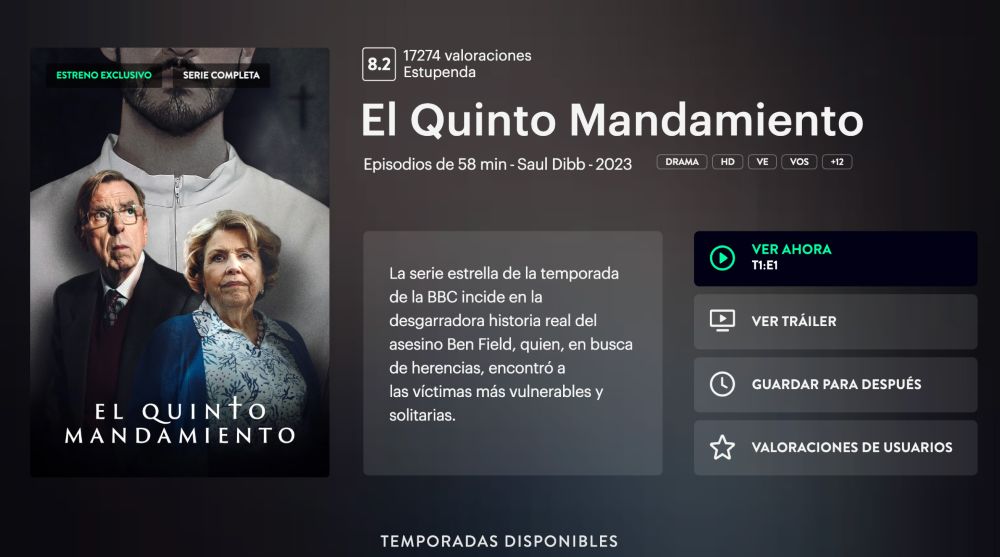
(Original TV app media title page on entry)
Top Insight #1
Decision confidence comes from simplified evaluation
The original TV app page had a four-action menu and seven full subsections listed below it, presented as a vertically scrollable screen more commonly used on desktops. Users expressed a need for enough context to decide what to watch without having to navigating through multiple rows.
Top Insight #2
Cross-platform continuity can reduce re-engagement friction
People expected our streaming service to remember where they’d been and what they’d done previously, regardless of the device they used to access it. They wanted it to feel easy to resume, revisit, or rediscover content they had already shown interest in.
Top Insight #3
A sense of personal ownership can increase engagement and connection
Features such as likes, saved lists, collections, favorite directors or cast members, and viewing history represented more than just utilities. They reflected each person’s growing relationship with our streaming service and were more impactful when presented together.
Service Journey Mapping
Adapting the scope for continuity across various touchpoints
The original scope focused on redesigning Filmin’s TV media page, which users called more outdated and disconnected from the rest. But after digging into research insights, we realized the page itself was only one symptom. The deeper issue was fragmentation across not just the media pages, but the viewing journey: users were discovering, saving, resuming, and revisiting content across different touchpoints, but the service didn’t help those moments feel connected. We needed to reapproach and map out our strategy.
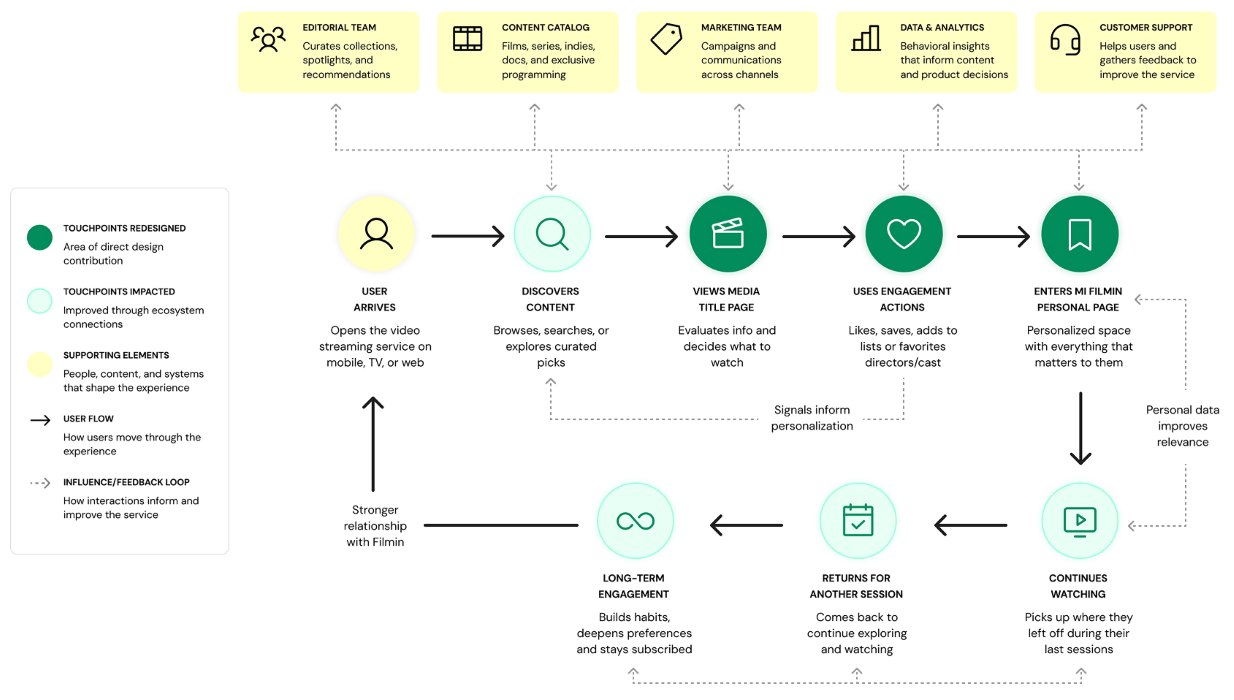
Product Design
Reshaping the viewing journey
Understanding the fragmented pieces of the journey reframed our work from a single-surface redesign into a broader set of connected initiatives aimed at improving continuity and personalization across the Filmin experience.
Key Decision #1
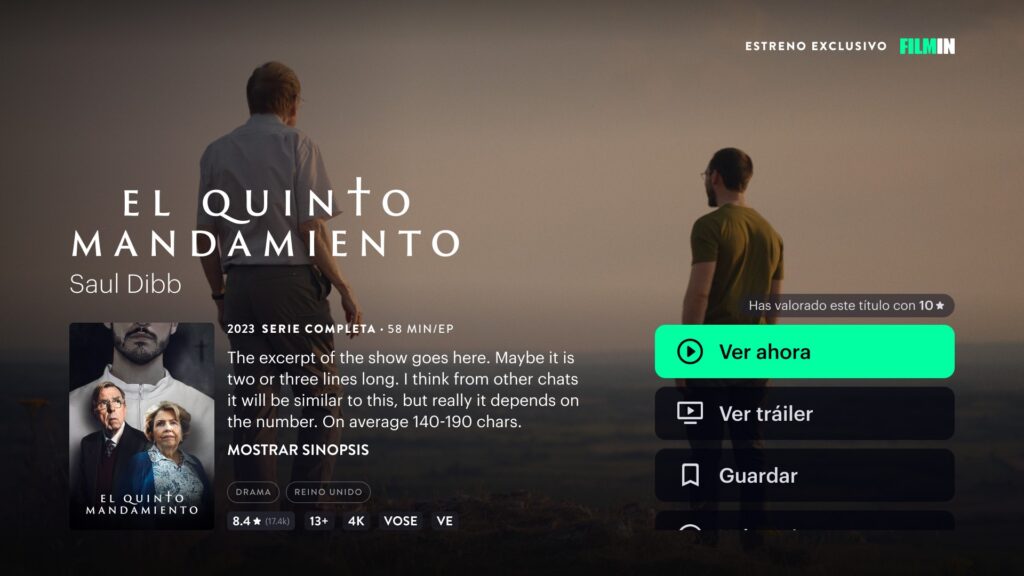
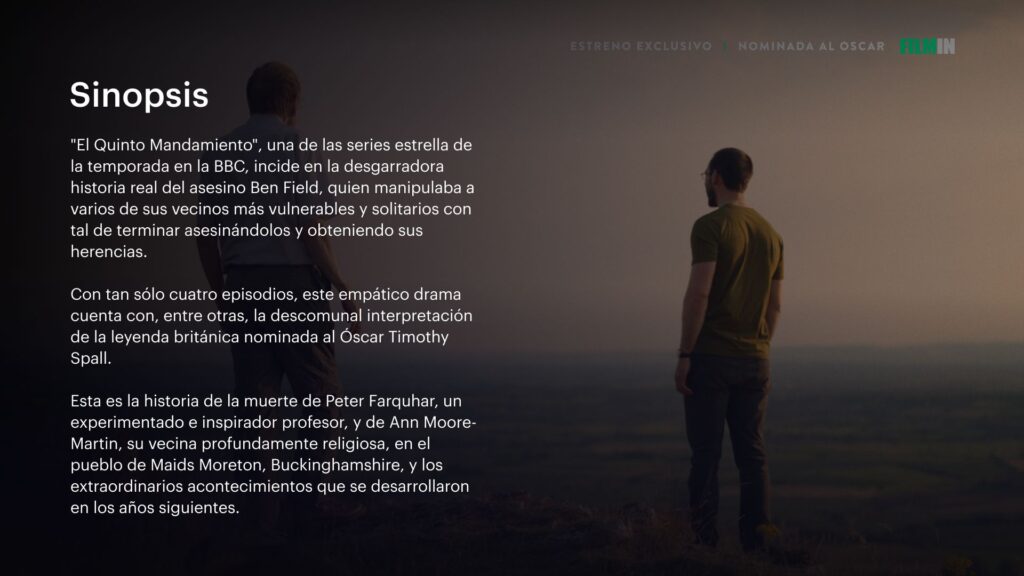
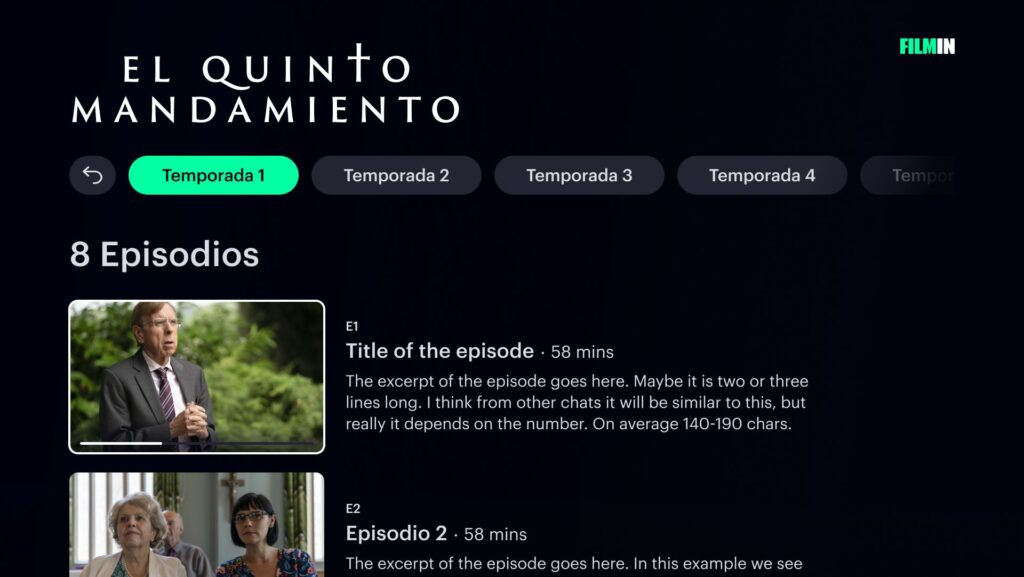
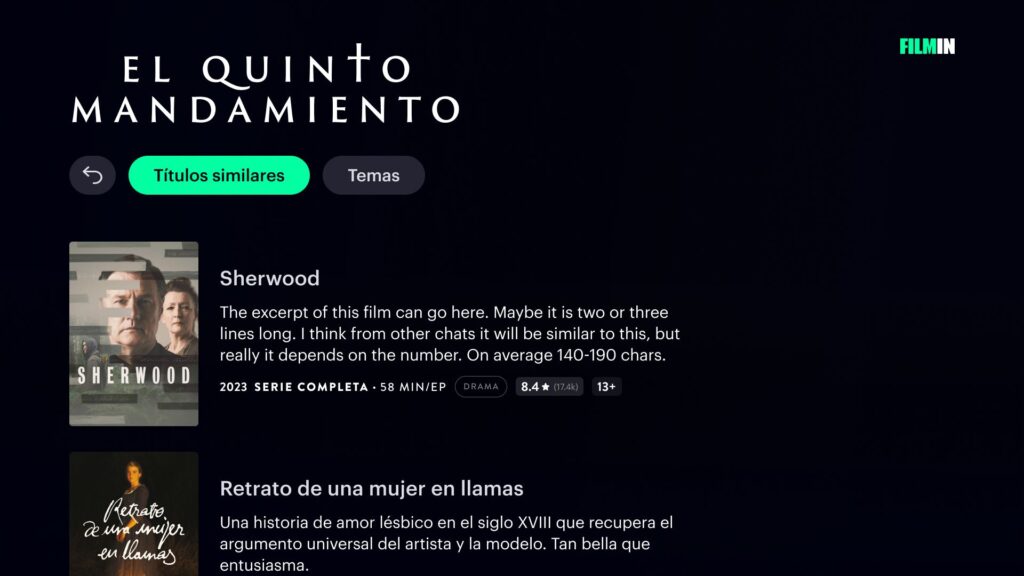
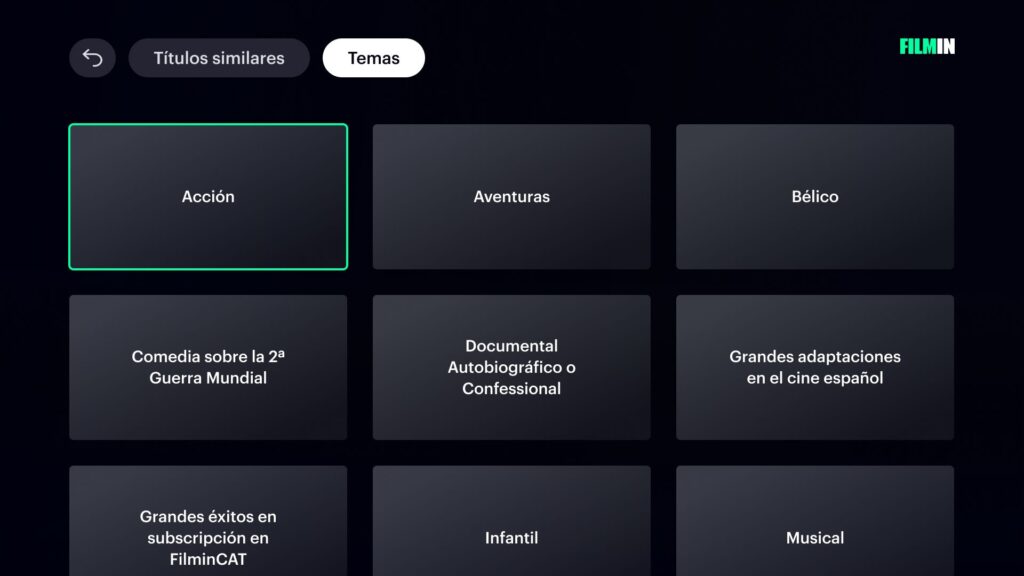
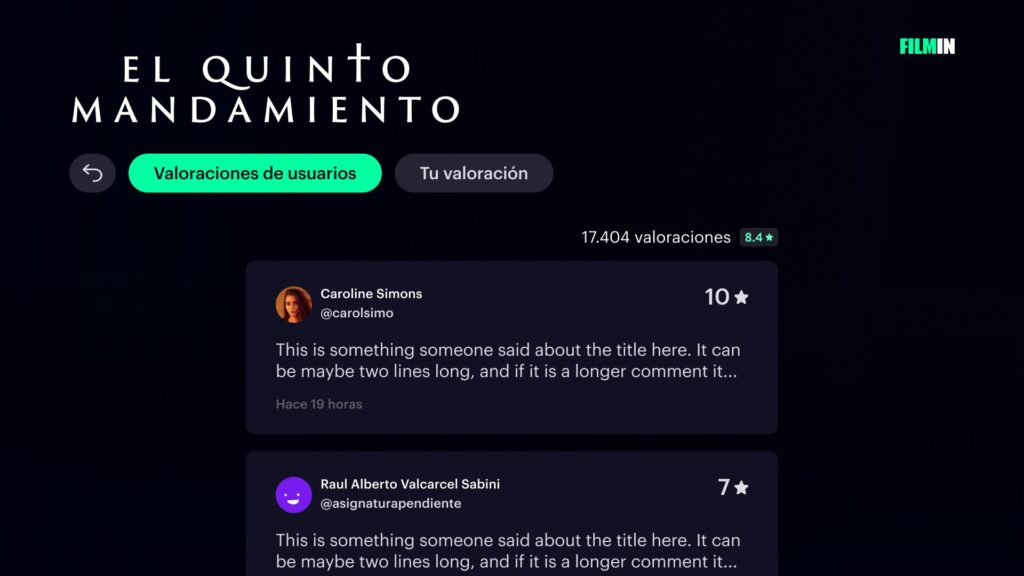
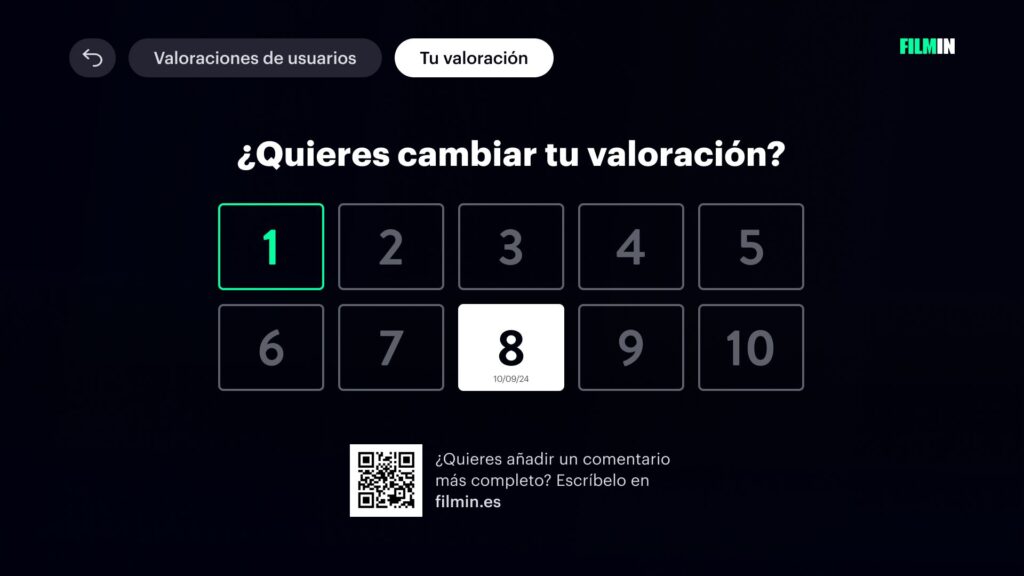
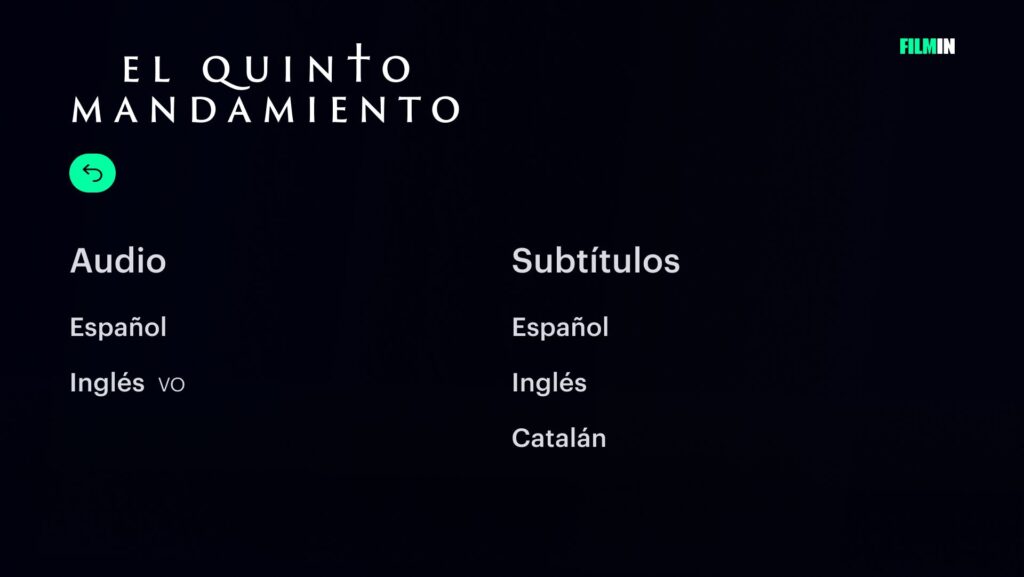
Simplify content evaluation with a new media page, menu, and internal pages

Initiative scope
I redesigned the journey by prioritizing information and actions users needed most, reducing overall navigation depth, supporting faster viewing decisions, and more strongly aligning with TV platform standards familiar to users.
We also worked directly with the Editorial team and developers to redefine tags, curated content, and content metadata to adapt to the new strategy.
Trade-off: Fewer clicks vs faster access to relevance
Converting the seven subsections into internal pages via a new scrollable menu introduced a tradeoff between click efficiency and information access.
I prioritized efficiency in reaching the right information over efficiency in movement through the first page, so users could access content they cared about without repeatedly reading through sections that weren’t useful to them.
Key Decision #2
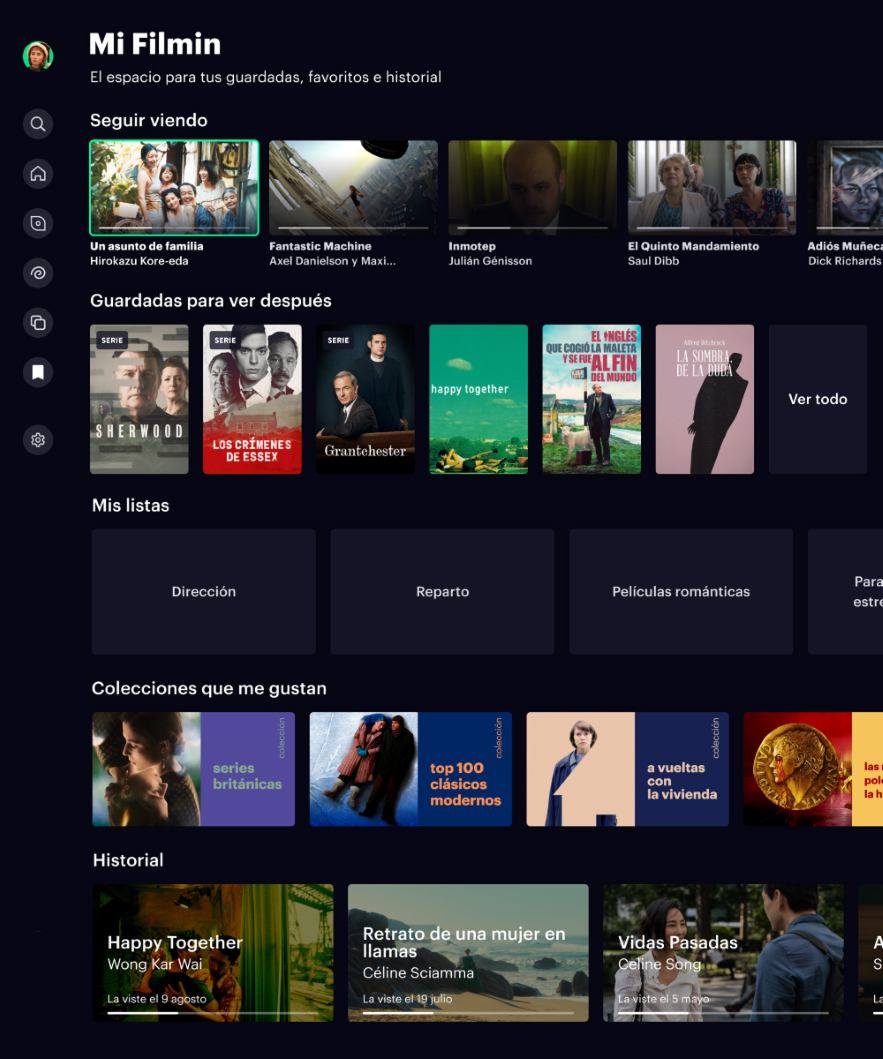
Connect fragmented touchpoints via a new personalized space
Initiative Scope
I unified previously separate experiences including saved content for later, “liked” content, user lists, viewing history and continue watching data. It came together in a personalized destination we decided to call “Mi Filmin,” the space where Filmin focuses on you.
Collaborations with Editorial, Backend, and Customer Support teams helped us better align on defining new logic, service/internal rules, notifications, and onboarding strategies.
Trade-off: Cross-platform consistency vs platform-specific optimization
Resource and stakeholder constraints meant that full design consistency across TV, mobile, and web was not always possible.
Rather than forcing uniformity, I prioritized consistency in the moments that shaped continuity and recognition, while letting each platform adapt to its own behaviors, patterns, and technical realities.
Key Decision #3
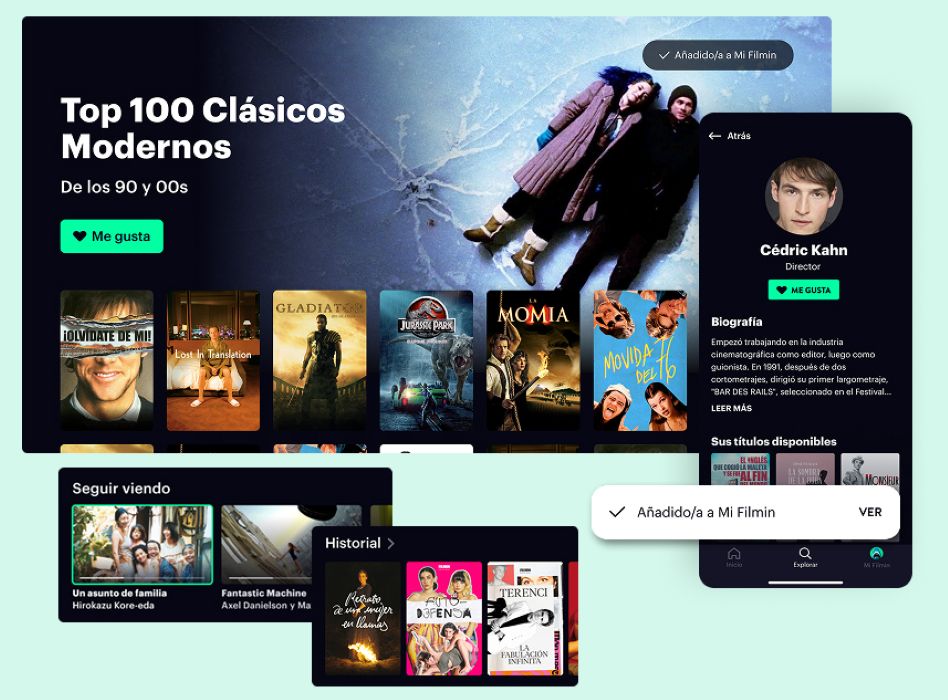
Support continuity across sessions and devices
Initiative Scope
The goal was to make previous activity visible and actionable so users could continue their journey seemlessly across sessions. With this redesign, finally users could discover new preferences through the mobile app and return to interact with that viewed and saved content from the TV app, and vice versa.
Ensuring this continuity required clear communication and collaboration with Product, Engineering, Editorial, Customer Support, Marketing, and Quality Assurance teams to balance front and backstage execution.
Trade-off: Cross-device consistency vs technical constraints
Platform limitations meant the ideal cross-device experience could not always be delivered. For example, creating and editing personal lists was supported on web and mobile, but not on TV.
Rather than forcing a false sense of consistency, I focused on reducing friction at the points where users were most likely to feel that gap, using clear system feedback, edge cases, and guidance to preserve continuity wherever the service could support it.
Outcome & Impact
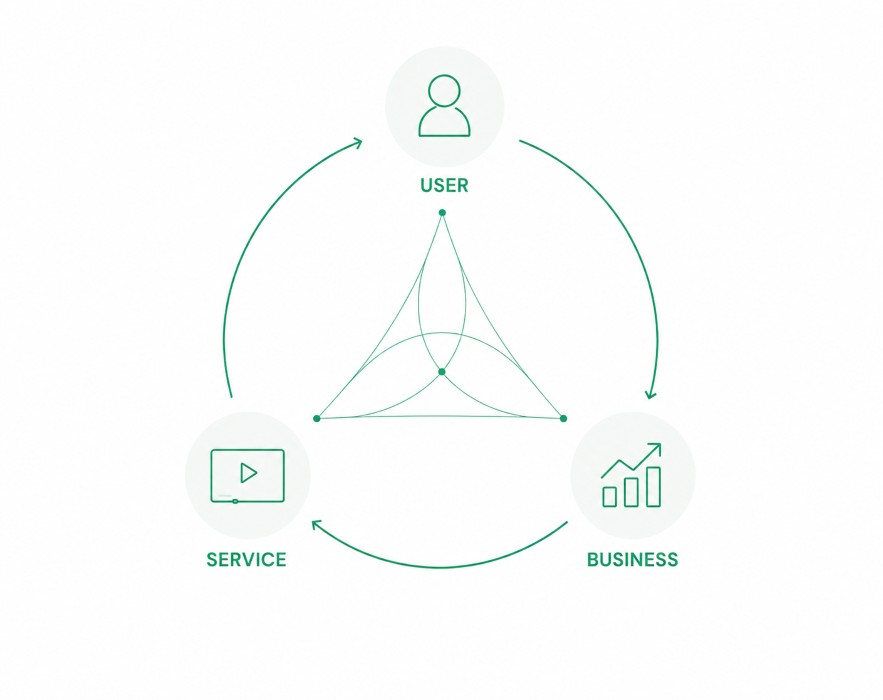
Balanced user needs, service coherence, and retention goals
By improving how people discover, evaluate, save, and return to content, we created a more continuous viewing experience that reduced friction, surfaced meaningful behavioral signals, and strengthened long-term engagement.
Improved experience efficiency & engagement
- Reached saved content in fewer steps
- Faster evaluation through simplified pages
- Improved continuity between discovery & return
- Positive qualitative feedback around ease of use
- 70% increase in loading speed of the media page
Validated adoption within first month
- 20% of subscribers actively used Mi Filmin
- 15x increase in “Likes” per week
- More users created personal collections and saved content
Increased content consumption
- 2× increase in “Play Now” interactions
- Higher repeat visits across devices
- Stronger retention signals
- Higher utilization of existing service features
Reflections
Approach connecting system touchpoints holistically, looking beyond individual interfaces
I realized a lot of the value in personalization actually comes from helping people build continuity with the service they are using, regardless of how they access it. This means remembering what matters to them, preserving context between sessions, and reducing the effort required to return to their meaningful content.
Designing these connected experiences made me look beyond individual interfaces and understand how each touchpoint contributed to the overall relationship between the user and the product.